
When you get an estimate for a new roof, it can be easy to look at the total and think, “That much for shingles?”
But shingles are only one part of what you’re actually paying for.
A complete roof replacement involves removing the existing roofing materials, preparing and protecting the roof deck, installing an entire roofing system, handling labor and cleanup, and making sure all of those components work together to protect your home.
At Barringer Brothers Roofing, we’ve served homeowners throughout Southern Illinois and the Metro East since 2004, earning 200+ five-star reviews. If you’re wondering what a new roof includes, here’s where the work—and your money—actually goes.
1. Removing Your Old Roof
Before your new roof can go on, the existing shingles typically need to come off.
Roof tear-off is a significant part of the project. Crews have to remove the old roofing materials while protecting your siding, landscaping, and other areas around the home.
By the time your finished roof is installed, this entire part of the job is invisible—but it’s an important step in the replacement process.
2. Inspecting What’s Underneath
Tearing off the old shingles gives an opportunity to see parts of the roof that weren’t fully visible beforehand.
One of the most important is the roof decking.
The decking creates the structural surface the roofing system is installed over.
This is also why an estimate can’t always predict everything that will be found once a roof comes off.
3. The Materials Under Your Shingles
The shingles get all the attention because they’re the part of your roof you actually see.
But underneath them are other roofing materials designed to help protect your home.
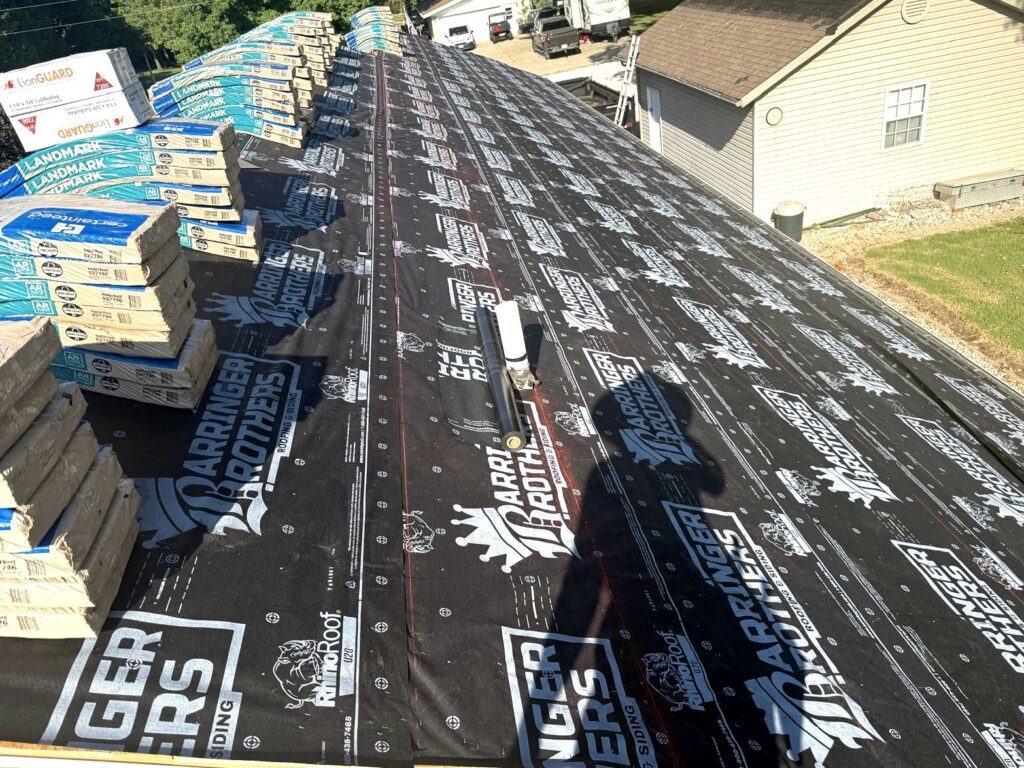
Depending on the roofing system and home, that can include underlayment, additional protection in vulnerable areas, starter shingles, flashing, ventilation components, and other materials.
Once installation is complete, you’ll probably never think about most of them again.
But they’re part of what you’re buying.
4. Your Asphalt Shingles
Of course, a portion of your roof replacement cost does go toward the shingles themselves.
At Barringer Brothers Roofing, we install CertainTeed asphalt shingles.
The exact amount of roofing material needed depends on the size and design of the roof. A larger or more complex roof naturally requires more material than a small, simple roof.
Roof features such as hips, valleys, dormers, and multiple roof sections can also affect the amount of material and installation work involved.
5. Flashing and Other Important Details
Some of the smallest-looking parts of a roof can require a lot of attention.
Anywhere your roofing system meets another surface or has an opening—such as walls, vents, chimneys, or other penetrations—water needs to be properly directed away.
That’s where flashing and other roofing details become important.
These areas may not account for much of the visible square footage of your roof, but installing them properly is an important part of the job.
6. Labor
You’re not only paying for roofing materials. You’re paying for the people who know how to install them.
Roof replacement is physically demanding work that requires crews to safely remove materials, prepare the roof, install the new roofing system, work around penetrations and transitions, and complete the project according to the manufacturer’s installation requirements.
A quality shingle doesn’t install itself.
The workmanship behind your roof matters just as much as the products being installed.
That’s one reason two roofing estimates using similar shingles may still have different prices.
7. Equipment and Job-Site Setup
There’s more happening around your house on installation day than a crew climbing onto the roof.
Roofing contractors need ladders, safety equipment, tools, vehicles, material handling equipment, and other supplies to complete the project.
Materials have to be delivered and positioned, the property has to be prepared, and the crew needs to be able to work efficiently while protecting the surrounding home.
Those behind-the-scenes logistics are part of completing a professional roof replacement.
8. Cleanup and Disposal
Getting the new shingles installed isn’t the final step.
The old roofing materials and packaging need to be removed, the property needs to be cleaned, and the job site should be left in good condition.
Homeowners understandably focus on what their house looks like when the project is finished, but a professional roofing job also includes taking care of the mess created along the way.
You shouldn’t be left wondering what to do with piles of old shingles after your roof replacement.
9. The Contractor Behind the Roof
Part of what you’re paying for is also the company standing behind the work.
A legitimate roofing company has operating expenses that aren’t visible on your roof: insurance, vehicles, equipment, trained employees, administrative staff, licensing or other local requirements, and the systems necessary to manage projects and serve customers.
That matters because a roof isn’t a small purchase.
If you have a question during the project—or after the roof is complete—you want to know who you’re calling.
Why Can Two Roofing Estimates Be So Different?
This is where homeowners can get confused.
You might get two estimates for the same house and see a noticeable difference in price.
That doesn’t necessarily mean one contractor is simply charging more for the exact same thing.
The estimates may include different:
- Shingle products
- Roofing system components
- Installation methods
- Warranty options
- Amounts of necessary work
- Cleanup and disposal
- Contractor experience and workmanship
Before comparing only the totals at the bottom of the page, make sure you’re actually comparing what each contractor is providing.
The cheapest estimate isn’t automatically the same roof for less money.
What Does a New Roof Include That You Can’t See?
Quite a bit.
When your project is finished, most people will see the shingles, ridge lines, and maybe some flashing.
They won’t see the preparation underneath, the old roof being removed, the decking inspection, or most of the protective roofing components beneath the shingles.
And they definitely won’t see the hours of labor that went into turning a stack of roofing materials into a completed roofing system.
That’s why judging the value of a roof replacement based solely on the price of shingles doesn’t give you the full picture.
What Are You Really Buying?
Ultimately, you’re buying much more than a new color on top of your house.
You’re paying for the removal of the old roofing system, preparation of your home, materials, installation, labor, cleanup, and a finished roof designed to protect everything underneath it.
The shingles are just the part you’ll continue seeing after everyone leaves.
Frequently Asked Questions
A complete roof replacement typically involves removing existing roofing materials, inspecting the roof deck, installing the necessary roofing system components and new shingles, handling flashing and other details, and cleaning up and disposing of project debris.
Material costs are an important part of the total, but you’re also paying for labor, tear-off, disposal, additional roofing components, equipment, installation, and other project expenses.
Roofing estimates can vary because contractors may be quoting different materials, roofing systems, scopes of work, warranty options, and installation practices. Make sure you’re comparing what’s actually included rather than looking only at the final price.
For a full tear-off roof replacement, removal and disposal of the existing roofing materials should be accounted for in the project. Ask your contractor exactly what’s included in your estimate so you understand the scope of work.
Some decking problems can’t be fully seen until the old roofing materials are removed. If damaged decking is discovered, your roofing contractor should explain what was found and what needs to be done before the new roofing system is installed.
Price is only one factor to consider. Materials, workmanship, experience, insurance, warranties, communication, and exactly what is included in the project can all affect the value you’re receiving.
Want to Know What Your Roof Replacement Would Include?
Every home is different, which means the best way to understand what your new roof would involve is to have someone actually take a look at it.
Barringer Brothers Roofing provides asphalt roof replacements throughout Southern Illinois and the Metro East, and we’ll walk you through the project so you understand what you’re paying for and what to expect.
Want more information about replacing your roof? Call Barringer Brothers Roofing at (618) 703-3036 or fill out our online contact form to learn more or request a free estimate.
