
Shingles are always replaced during a roof replacement. But what about everything underneath them?
New underlayment is typically installed as part of a new roofing system. It gives the new shingles a fresh secondary layer of protection over the roof deck.
At Barringer Brothers Roofing, we install complete asphalt roofing systems for homeowners throughout Shiloh, IL and the Metro East. Here’s why the material underneath your shingles matters more than you might realize.
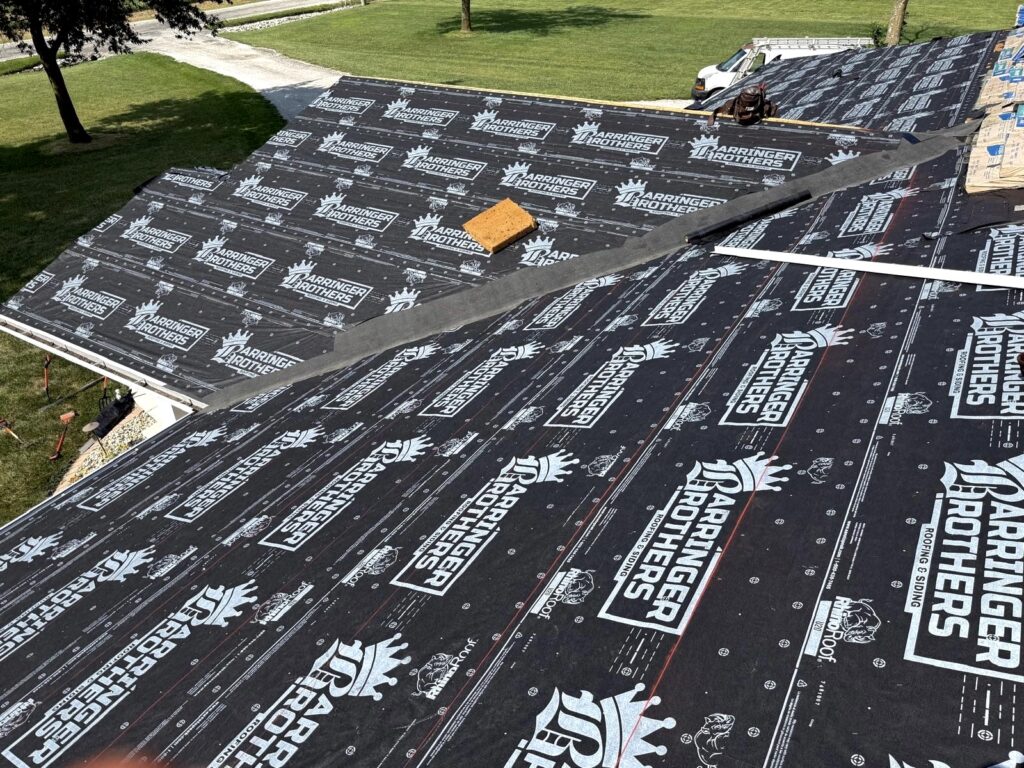
First, What Is Roof Underlayment?
Roof underlayment is the layer installed directly over your roof decking and underneath the shingles.
You normally never see it once your roof is finished, but it has an important job. Underlayment provides an additional water-resistant layer beneath the shingles, helping protect the roof deck if moisture gets past the primary roof covering.
That black material covering the roof in the photo above? That’s underlayment.
Why Replace It If It’s Covered by Shingles?
Your roof is designed as a system—not just a layer of shingles.
Underlayment spends years underneath the existing roof. When it’s time for a complete roof replacement, installing new underlayment gives the new roofing system its own protective layer rather than relying on an older material with an unknown remaining lifespan.
It also gives the roofing crew an opportunity to properly prepare the roof deck before the new shingles are installed.
What Happens When the Old Roof Is Torn Off?
During a complete tear-off, the existing shingles are removed so the roofing contractor can get down to the roof deck.
This is important because it exposes something homeowners normally can’t see: the condition of the decking underneath the roof.
Once everything is exposed, the roof deck can be checked for deterioration or damaged areas that may need attention before the new roofing materials are installed.
Then the new roofing system can begin from a solid foundation.
Does Underlayment Actually Stop Leaks?
Think of it as backup protection.
Your shingles are the primary defense against the weather. Underlayment sits underneath them and provides an additional water-resistant barrier over the roof deck. CertainTeed describes synthetic underlayment as a secondary layer of protection beneath asphalt shingles, while waterproofing membranes can provide added protection in particularly vulnerable areas.
It’s one of those parts of your roof you hope never has to do much—but you definitely want it there.
Is the Same Underlayment Used Everywhere?
Not necessarily.
Different areas of a roofing system may require different types of protection.
For example, a synthetic underlayment may cover much of the roof deck, while waterproofing underlayment can be used in vulnerable areas where additional protection is needed.
The exact materials and installation requirements depend on the roofing system, roof design, manufacturer specifications, and applicable requirements for the project.
What If the Existing Underlayment Looks Fine?
With certain reroofing situations, existing materials can sometimes remain in place. But that is different from a complete roof replacement where the existing roofing system is being torn off.
There are also special situations involving self-adhering membranes that have bonded tightly to the decking, because removing them can potentially damage the wood underneath. Manufacturer guidance and project-specific conditions matter in those cases.
For homeowners, the bigger takeaway is simple: don’t assume getting “new shingles” means every roofing estimate includes the same work underneath them.
Why the Layers You Can’t See Matter
Once your new shingles are installed, you won’t see the underlayment anymore.
That doesn’t make it any less important.
A quality asphalt roof includes multiple components working together, including the roof deck, underlayment, shingles, flashing, starter shingles, ridge caps, and ventilation.
That’s why two roofs that look nearly identical from the street can be very different underneath.
Ask What Your Roofing Estimate Actually Includes
When you’re comparing roofing estimates in Shiloh, don’t only compare the shingle color, brand, and final price.
Ask what’s happening under the shingles, too.
A roofing contractor should be able to explain what materials are being removed, what new materials are being installed, and how the different parts of the roofing system work together.
Your roof is going to be covered up when the project is finished. You want to know it was done right before everything disappears underneath the shingles.
Frequently Asked Questions
For a complete tear-off and roof replacement, new underlayment is typically installed over the prepared roof deck before the new asphalt shingles are installed.
Roof underlayment provides an additional water-resistant layer between your roof decking and shingles, helping provide secondary protection from moisture.
No. Once the asphalt shingles and other roofing components are installed, the primary underlayment is covered.
Not necessarily. Many synthetic underlayments are designed to be water-resistant, while specific self-adhering membranes are designed to provide waterproofing protection in vulnerable areas.
Removing the existing roofing materials allows the condition of the decking underneath to be evaluated before the new roofing system covers it.
Replacing Your Roof in Shiloh, IL?
There’s a lot more going into your new roof than the shingles you see from the driveway.
Barringer Brothers Roofing installs complete asphalt roofing systems for homeowners throughout Shiloh, IL and the surrounding Metro East, with attention to both the visible materials and the layers underneath them.
Call Barringer Brothers Roofing at (618) 703-3036 or fill out our online contact form to schedule your free estimate.
