
You may have looked at a roof without realizing there is a ventilation system running along the top of it.
That’s a ridge vent.
A ridge vent is designed to blend into the roofline. It runs along the ridge of the roof and gives warm, humid air inside the attic a place to escape.
At Barringer Brothers Roofing, we’ve served homeowners throughout Southern Illinois and the Metro East since 2004, earning 200+ five-star reviews. Proper ventilation is one part of a roofing system that homeowners may not think about.
So, what exactly is a ridge vent, how does it work, and why would your roof need one?
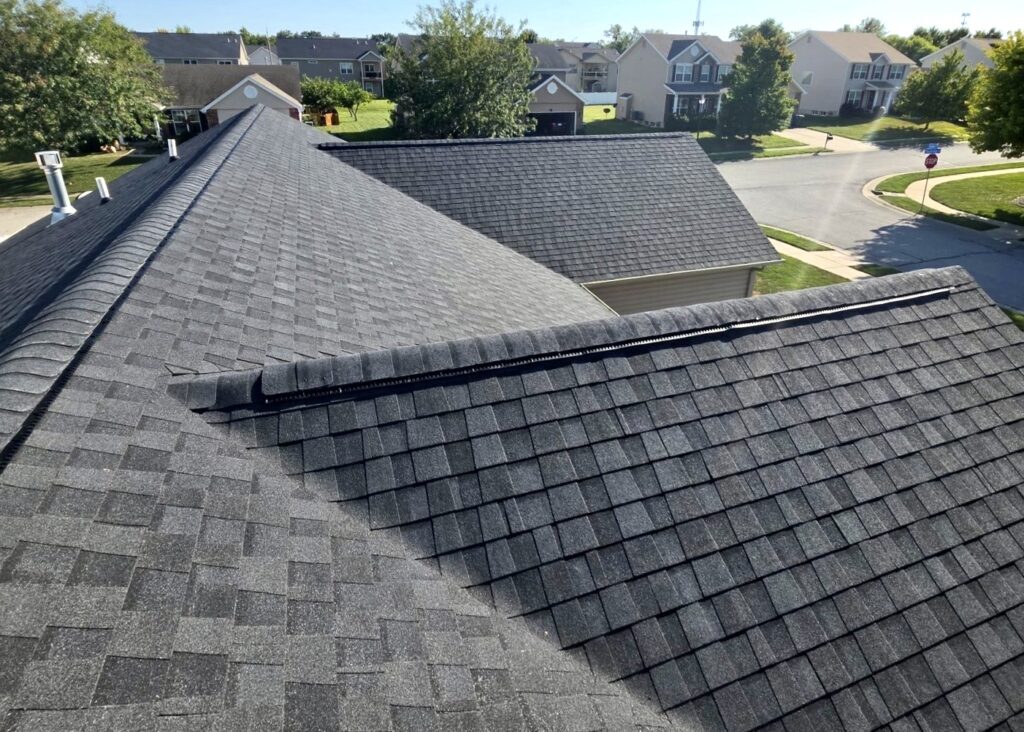
What Is a Ridge Vent?
A ridge vent is a type of exhaust vent installed along the peak of a sloped roof.
The ridge is the highest horizontal point where two roof slopes meet. During installation, an opening is left or cut along the roof decking near this ridge. The ridge vent is installed over that opening, allowing air from the attic to escape.
Ridge cap shingles are then installed over the vent, which is why a finished ridge vent doesn’t usually look like a big opening in your roof.
From the ground, you may barely notice it.
That’s intentional.
A ridge vent is designed to allow airflow while helping keep rain and other outside elements from entering the roof through the opening.
Why Does an Attic Need Ventilation?
It might seem strange to intentionally create openings in a roof that’s supposed to keep the weather out.
But your attic isn’t meant to be completely sealed off from outside air.
Heat and moisture can build up inside an attic. A properly designed ventilation system helps move that air through the attic instead of trapping it inside.
And the ridge vent is only one half of that process.
How Does a Ridge Vent Work?
Think of attic ventilation as a system rather than a single vent.
Typically, cooler outside air enters through intake ventilation near the lower portion of the roof, often through soffit vents.
As air inside the attic warms, it naturally rises toward the highest point.
That’s where the ridge vent comes in.
The warmer air can exit through the vent along the roof’s peak while replacement air enters through the intake vents below.
So the basic process looks like this:
Air enters low → moves through the attic → exits high.
A ridge vent helps provide that high exhaust point.
Is That Black Strip on Top of My Roof a Ridge Vent?
Possibly.
The photo above is actually a great example of what a ridge vent can look like during a roofing project.
Once the roof is finished, that vent becomes much less noticeable because the ridge caps cover the top.
That’s one reason homeowners may have a ridge vent for years without realizing it’s there.
What’s the Difference Between a Ridge Vent and Ridge Cap Shingles?
These two parts sit in essentially the same area, but they aren’t the same thing.
The ridge vent is part of the ventilation system beneath the finished surface.
The ridge cap shingles are the shingles installed along the ridge to finish and protect that area.
On a roof with a ridge vent, the finished assembly essentially layers the components together: the opening in the roof decking allows attic air to escape, the ridge vent covers that opening, and ridge cap shingles finish the exterior.
So when you’re standing in the yard looking at a completed roof, you’re generally seeing the finished ridge caps—not an exposed ventilation opening.
Does Every Roof Have a Ridge Vent?
No.
Homes can use different types and combinations of attic ventilation, and the appropriate setup depends on the design of the house and roof.
You may see other exhaust ventilation methods on some roofs instead.
That’s also why simply adding more vents isn’t necessarily the solution to a ventilation issue. Roof ventilation needs to work as a balanced system, with appropriate intake and exhaust.
What works for one house isn’t automatically the correct setup for another.
What Are Soffit Vents?
If a ridge vent lets air out, something needs to let air in.
That’s commonly where soffit vents come into the picture.
The soffit is located underneath the roof overhang. Vented soffits can provide intake ventilation near the lower portion of the roof.
Outside air enters through these lower vents, moves through the attic, and can eventually exit through exhaust ventilation near the top.
If intake airflow is restricted, an exhaust vent can’t necessarily perform as intended.
That’s why looking at only the ridge vent doesn’t tell you everything about an attic’s ventilation.
Why Is a Ridge Vent So Long?
A ridge vent often runs across a substantial portion of an eligible roof ridge rather than being one small opening.
This allows exhaust ventilation to be distributed along the upper portion of the attic instead of relying on a single small exhaust point.
It also helps explain why ridge vents look so different from the small individual vents homeowners may be accustomed to seeing.
Instead of several obvious objects sticking through the roof, the ventilation is integrated into the roofline.
Can Rain Get Through a Ridge Vent?
It’s a reasonable question considering there’s an opening underneath it.
A properly installed ridge vent is designed to allow airflow while helping prevent weather from entering the opening.
The vent itself and the ridge cap shingles above it are part of an assembly designed specifically for that location on the roof.
As with any roofing component, though, installation matters. The vent, opening, and ridge caps all need to be installed correctly.
Can You See a Ridge Vent From Inside the Attic?
You may be able to identify the ventilation area near the peak from inside an accessible attic, but homeowners shouldn’t start cutting, blocking, or altering anything based solely on what they see.
Insulation or other materials can sometimes interfere with ventilation pathways, and attic ventilation should be evaluated as a complete system.
If you’re concerned that your attic isn’t ventilating properly, it’s better to have the system evaluated than to start adding or changing vents yourself.
Is a Ridge Vent Replaced When You Get a New Roof?
When a roof is replaced, the contractor evaluates the roof’s existing ventilation and determines what is appropriate for the new roofing system.
If a ridge vent is part of that system, the roofing work around the ridge needs to be properly completed as part of the installation.
This is also a good time to look at the overall ventilation setup because the shingles are only one part of how a roof performs.
What Happens If an Attic Isn’t Properly Ventilated?
Poor attic ventilation can contribute to excess heat and moisture inside the attic.
That doesn’t mean every hot attic or moisture problem is automatically caused by a ridge vent—or that installing one will solve every issue.
Ventilation interacts with other parts of the home, including insulation, air sealing, bathroom exhausts, and the design of the roof itself.
That’s why it’s important to determine the actual cause of a problem rather than simply assuming the roof needs another vent.
Ridge Vents Are One Small Part of a Much Bigger Roofing System
When most people picture a roof, they picture shingles.
But a finished roof is made up of many components working together.
The shingles are the most visible part. Underneath and around them are decking, underlayment, flashing, ventilation components, pipe boots, drip edge, and other details.
A ridge vent is a perfect example of a roofing component that can be extremely noticeable during installation and almost invisible once the job is finished.
The next time you look at the peak of your roof, there’s a chance there’s much more happening underneath those ridge cap shingles than you realized.
Frequently Asked Questions
A ridge vent provides exhaust ventilation near the highest point of a roof, allowing warm, humid attic air to escape as part of a properly designed ventilation system.
It is installed along an eligible ridge at the peak of a sloped roof, where two roof planes meet.
Sometimes, but many ridge vents are designed to blend into the roof. Ridge cap shingles are installed over the vent, making the finished system much less noticeable.
Not necessarily. There are different methods of attic ventilation, and the appropriate system depends on the home’s roof and attic design.
A ventilation system needs appropriate intake as well as exhaust. Soffit vents are a common source of intake air, although the appropriate ventilation design varies by home.
No. The ridge vent provides ventilation underneath, while ridge cap shingles create the finished exterior covering along the roof’s ridge.
If ridge ventilation is appropriate for the home’s ventilation system, it can be installed as part of a roof replacement. The overall ventilation needs of the house should be considered rather than treating the ridge vent as a stand-alone component.
Have Questions About Your Roof?
You don’t have to know the name or purpose of every component on your roof—that’s what your roofing contractor is there for.
Barringer Brothers Roofing has served homeowners throughout Southern Illinois and the Metro East since 2004.
Have questions about your roof, ventilation, or a roofing project? Call Barringer Brothers Roofing at (618) 703-3036 or fill out our online contact form for more information, to have your roof evaluated, or to request an estimate.
