
When you look at a finished roof, shingles are pretty much all you see. But there’s a lot more protecting your home underneath them.
A new asphalt roof is made up of several components that work together to keep water out, handle weather, and protect the structure of your home. The shingles matter, but they’re only one part of the complete roofing system.
At Barringer Brothers Roofing, we install asphalt roofing systems throughout Swansea, IL and the Metro East. Here’s a look at what actually goes into a new roof and why each part matters.
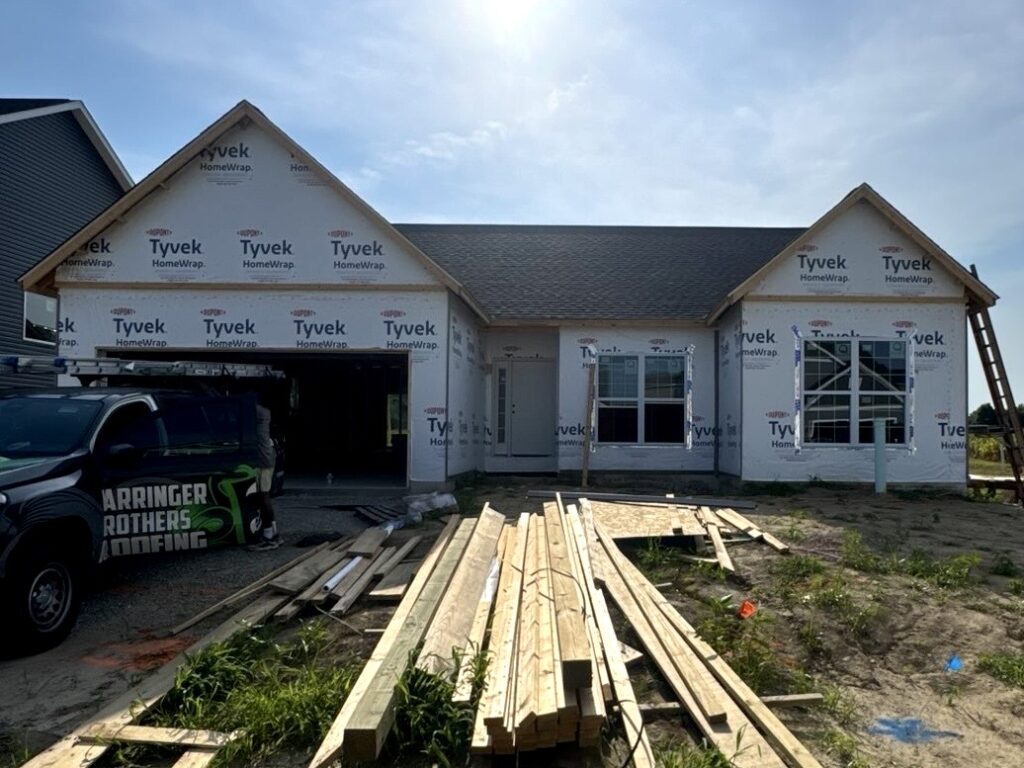
1. Roof Decking
Everything starts with the roof decking.
Decking is the solid surface attached to the framing of your home that provides the base for the rest of the roofing system. Depending on the home, it’s commonly made from plywood or OSB.
During a roof replacement, removing the existing roofing materials allows the decking to be checked for damage. Any areas that are rotted, weakened, or otherwise unable to properly support the new roof may need to be replaced before installation continues.
A quality roofing system needs a solid foundation underneath it.
2. Underlayment
Before shingles are installed, the roof deck is covered with underlayment.
This creates another protective layer between the shingles and the decking underneath. If wind-driven rain or moisture ever gets beneath the shingles, the underlayment provides additional protection for the roof deck.
It may not be visible once the roof is finished, but it plays an important role in the complete roofing system.
3. Ice and Water Protection
Certain areas of a roof are more vulnerable to water intrusion than others.
Ice and water protection may be installed in areas that need additional protection, such as valleys, eaves, and around certain roof penetrations.
These areas can experience concentrated water flow or other conditions that make proper protection especially important.
4. Flashing
Anywhere a roof meets another surface or has an opening requires extra attention.
Flashing helps direct water away from vulnerable areas around:
- Chimneys
- Walls
- Valleys
- Plumbing vents
- Other roof penetrations
Flashing may not be the most noticeable part of your roof, but improper flashing can become a major source of leaks.
5. Starter Shingles
The first row of shingles around the edges of a roof isn’t simply another row of standard shingles.
Starter shingles create the foundation for the shingle installation along the roof edges and help provide protection against wind uplift.
Like many roofing components, you probably won’t notice them once the project is finished—but they’re still an important part of proper installation.
6. Asphalt Shingles
Then comes the part everyone recognizes: the shingles.
Asphalt shingles create the primary exterior surface of the roof and protect the home from rain, wind, sun, and other weather conditions.
At Barringer Brothers Roofing, we install CertainTeed asphalt shingles. Homeowners can choose from different colors and styles to complement the rest of their home while getting a roofing product designed for long-term performance.
But even a quality shingle depends on everything underneath it being installed correctly.
7. Roof Ventilation
Ventilation is another part of the roofing system homeowners may not immediately think about.
A properly ventilated attic allows air to move through the space and helps manage heat and moisture.
The exact ventilation setup can vary depending on the design of the home and roof. What matters is making sure the system is appropriate for the structure rather than treating ventilation as an afterthought.
8. Ridge Caps
The peaks where two roof slopes meet need their own protection.
Ridge cap shingles are specifically designed to cover these areas and create a finished appearance while helping protect one of the most exposed parts of the roof.
They’re another example of why a roofing system involves more than simply covering the entire surface with the same shingles.
Why All of These Parts Matter
A roof has one big job: protecting your home.
But it takes multiple components working together to do that job correctly.
Quality shingles installed over damaged decking won’t solve the underlying problem. Great underlayment won’t make up for poorly installed flashing. And even premium roofing materials can experience problems if the overall system isn’t installed properly.
That’s why homeowners should look beyond the shingles when comparing roofing contractors and estimates.
A New Roof Is a Complete System
When you invest in a new roof, you aren’t just buying shingles.
You’re investing in the decking, moisture protection, flashing, ventilation, shingles, ridge caps, installation, and all of the smaller details that allow those components to work together.
Many of those details disappear once the roof is finished, but they can make a major difference in how the roof performs over time.
Frequently Asked Questions
Shingles are extremely important, but they’re only one component. Underlayment, flashing, decking, ventilation, starter shingles, and other parts of the roofing system also contribute to protecting your home.
Not necessarily. The materials and installation details can vary based on the roof design, home, roofing product, and other project requirements.
No. Existing decking may be reused if it is in suitable condition. Damaged or deteriorated areas may need to be replaced before the new roofing system is installed.
Barringer Brothers Roofing installs CertainTeed asphalt shingles for residential roofing projects.
Each component needs to be installed correctly and work with the rest of the roofing system. Problems with flashing, underlayment, ventilation, nail placement, or other installation details can affect how well the finished roof performs.
Building a Better Roof Starts With the Entire System
Whether you’re building a home or replacing an existing roof in Swansea, the shingles you see are only part of what matters. Barringer Brothers Roofing focuses on the complete roofing system and the installation details that help protect your home for years to come.
Call Barringer Brothers Roofing at (618) 703-3036 or fill out our online contact form to schedule your free estimate.
